Our 2026 Convention offers six excellent presentations on diverse topics to choose from for our two breakout sessions.
Sessions will NOT be recorded.
Session II 11:15 AM- 1:15 PM
Sociopolitical Stress and Pathways to Resilience
Jaz Robbins, Psy.D., BCHN
Advanced Level
This workshop may be counted toward the Cultural Diversity and Social Justice requirement mandated every two years for license renewal.
Abstract: Drawing on research from neuroscience and multicultural psychology, participants will explore how prolonged exposure to sociopolitical stress activates fear circuits, disrupts autonomic regulation, and undermines resilience. Attendees will leave with an integrative toolkit that includes interventions from a variety of frameworks including trauma-informed care, multicultural psychology, and somatic healing.
Course Goals and Educational Objectives:
-
Integrate trauma-informed holistic nutrition concepts—such as gut-brain axis, inflammation, and stress-related eating patterns—by formulating at least two scope-appropriate suggestions for supporting clients coping with chronic sociopolitical stress.
Course Outline:
(1) Framing the Problem / 10 minutes
• Define sociopolitical stress as a unique form of chronic stress shaped by systemic inequities
• Introduce “double trauma” (personal lived distress compounded by systemic oppression)
(2) Neuroscience of Sociopolitical Stress / 10 minutes
• Describe the neurobiology of stress (HPA axis, autonomic dysregulation, impact on fear circuitry)
• Highlight impact on vagal tone, perceptions of safety, social connection
(3) Liberation Psychology, Cultural Responsiveness & Resilience / 10 minutes
• Reframing distress as a rational response to oppression while fostering collective healing
• Using cultural humility to deliver interventions that honor clients’ cultural narratives
(4) Adjunctive Insights from Holistic Nutrition / 10 minutes
• Nutrition’s impact on stress regulation, including neurotransmitter production
• How microbiome diversity relates to resilience and anxiety
(5) Integration & Clinical Application / 60 minutes
• Discussion and some experiential practice
o Trauma-informed care strategy
o Multicultural psychology strategy
o Somatic healing strategy
o Mindfulness strategy
o Cognitive strategies
o Nutritional psychology strategy
• Sample case study discussion and overview
(6) Question & Discussion / 20 minutes
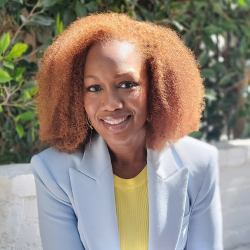
Jaz Robbins, Psy.D., BCHN, is a licensed psychologist and board-certified holistic nutritionist specializing in trauma-informed care and health psychology. Integrating nutrition science into her work, she provides individual, group, and family mental health services to adult trauma survivors. She also provides training and consultation to hospitals and healthcare organizations that serve trauma patients.
Conceptualizing and Treating Substance Use Disorders
Tara Mae Shultz, Psy.D.
Intermediate Level
Abstract: Substance use disorder is a mental health issue that can be challenging for clinicians to navigate. This presentation will explain how to conceptualize addiction from a psychodynamic and cognitive-behavioral viewpoint. Effective interventions pulled from both theories will be introduced and modeled after examining the history of treatment for addiction.
Course Goals and Educational Objectives:
Course Outline:
-
Introduction – (3 minutes)
Opening introduction by LACPA representative
-
Overview of Presentation (2 minutes)
Presenter introduces topic and objectives for the presentation
-
Brain Disease Model of Addiction (10 minutes)
History of addiction as a moral dilemma
Discussion of addiction as a brain disease
Current arguments against the brain disease model and how that affects treatment
-
History of Treatment for Addiction (20 minutes)
Native American Recovery Circles
Hospitals and Institutions
Origin of Twelve-Step programs
Washingtonians and Oxford Groups
Twelve-Step Groups and Alternatives
Brief psychoeducation on each step and how they correspond to evidence-based interventions
-
Conceptualizing Addiction Through the Lens of Object Relations Theory (20 minutes)
Winnicott and the false self
Fairbairn and central ego, libidinal ego, and antilibidinal ego
Kernberg and object constancy regarding the inability to self-soothe
-
Conceptualizing Addiction Through the Lens of CBT (25 minutes)
Core beliefs, dysfunctional assumptions, negative automatic thoughts, and schemas leading to shame and decreased self-esteem
Demonstration of the CBT triangle illustrating how thoughts and emotions perpetuate avoidance behaviors
Cognitive behavioral model of substance abuse
-
Effective Interventions for Substance Use Disorders (30 minutes)
CBT Interventions
Psychoeducation on CBT triangle and the cycle of addiction
Cognitive distortions worksheet to help client challenge negative thoughts about the self
Functional analysis to identify triggers and emotions that lead to relapse
Imagery rehearsal and meditation
Self-monitoring of cravings and moods
Psychodynamic Interventions
Help client explore and identify how internalized ‘bad objects’ contribute to maladaptive interpersonal relationships
Use of substance abuse timeline
Therapist as a secure base to explore shame
Mirroring, empathy, and compassion to internalize self-soothing and object constancy
Spirituality integrated with both CBT and Psychodynamic
Spirituality as separate from religion
Spirituality as an adaptive skill to regulate emotions
Spirituality and concept of higher power as a secure object
-
Questions and Answers Portion with Final Overview (10 minutes)
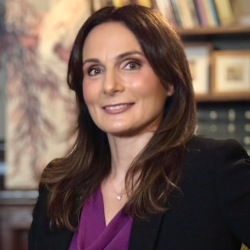
Tara Shultz, Psy.D., is a licensed clinical psychologist located in Los Angeles. She operates a private practice, where she specializes in substance use disorders and related challenges. In addition to her clinical practice, Dr. Shultz teaches an advanced psychodynamic course for graduate-level students at the Chicago School of Professional Psychology. She completed her internship and postdoctoral training at Tarzana Treatment Centers.
ADHD in Women: Misdiagnosis and Effective Treatment
Heather DeAngelis, MSW, LCSW-R, LCSW and Kristen Baird-Goldman, MA, LMFT
Advanced
This workshop may be counted toward the Cultural Diversity and Social Justice requirement mandated every two years for license renewal.
Abstract: ADHD in women is frequently under‑recognized or misdiagnosed, often labeled as anxiety, depression, or trauma‑related disorders due to masking and inattentive presentations. This advanced program provides psychologists with evidence‑based diagnostic frameworks, CBT & ACT‑informed interventions, and neurodiversity‑affirming approaches to enhance culturally responsive diagnostic precision and treatment planning.
Course Goals and Educational Objectives:
-
Attendees will be able to identify key factors contributing to the misdiagnosis of ADHD in women, including masking behaviors, inattentive presentations, and overlap with anxiety, depression, and trauma.
Course Outline:
Welcome & Introductions (5 minutes)
Why ADHD in Women Is Misdiagnosed (20 minutes)
-
Inattentive & internalizing patterns
-
Masking & compensatory strategies
-
Role expectations shaping symptom expression
-
How symptoms are misinterpreted as anxiety, depression, trauma
Clinical Presentation and Differential Diagnosis (30 minutes)
-
Overlap with mood, anxiety & trauma-related disorders
-
Markers that differentiate ADHD in adult women
-
Gathering history & evaluating functional impairment
-
Neurodiversity-affirming assessment considerations
Treatment Approaches Following Accurate Diagnosis (35 minutes)
-
CBT-informed strategies for ADHD (task initiation, cognitive patterns, behavioral activation)
-
ACT-informed strategies (values, emotional regulation, masking fatigue)
-
Executive function skills training (planning, time-management, organization)
-
Emotion regulation & distress tolerance tools relevant to ADHD in women
-
Applied Case Vignettes (20 minutes)
-
Cases illustrating missed ADHD
-
Diagnostic reasoning & treatment planning implications
Q & A & Closing (10 minutes)
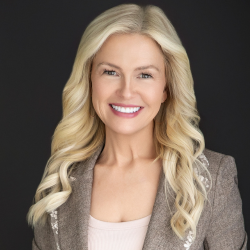
Heather DeAngelis, LCSW-R, LCSW, CEAP, specializes in adult ADHD with a focus on inattentive, often-missed presentations in women and high-functioning adults. She integrates ACT, CBT, and mindfulness-based interventions in her work and trains clinicians nationally. Heather serves on CHADD of California’s Board and presents at major conferences on ADHD and clinical best practices.

Kristen Baird-Goldman, LMFT, ADHD-CCSP, CIMHP, ATR, is a licensed therapist and adult ADHD specialist with 15+ years of experience. Author of The CBT Workbook for Adults with ADHD, she integrates CBT, ACT, MBCT, trauma-informed care, and somatic/expressive methods. A CHADD Board Member, she brings a neuroscience-informed, lived-experience perspective to clinical practice and professional training.
Session III 2:30- 4:30 PM
Ethical AI by Design in Behavioral Health
Christina Armstrong, Ph.D.
Intermediate
This workshop may be counted toward the legal and ethical requirement mandated every two years for license renewal.
Abstract: Artificial intelligence is reshaping behavioral health through assessment, intervention, and predictive tools. This 2-hour workshop introduces “Ethical AI by Design,” guiding professionals in responsible AI integration. Participants explore applications, evidence, and ethical frameworks, covering privacy, consent, competence, and equity, through case-based discussions to evaluate risks and ensure person-centered, ethical care.
Course Goals and Educational Objectives:
-
Describe the current landscape of AI tools used in behavioral health—including applications in assessment, intervention, digital phenotyping, and decision support—and summarize the emerging research evidence regarding their effectiveness, limitations, and ethical implications.
Course Outline:
I. Opening Segment (Total: 5 minutes)
A. Welcome and Introductions (3 minutes)
Opening remarks by LACPA representative: overview of LACPA’s mission, introduction of speaker, housekeeping notes.
B. Presenter Introduction and Session Overview (2 minutes)
Presenter introduction (name, credentials, experience).
Review of workshop objectives, agenda, and interactive components.
II. Setting the Stage: AI in Behavioral Health (Total: 10 minutes)
A. Contextual Overview (5 minutes)
Definition of AI and subtypes relevant to behavioral health (e.g., machine learning, natural language processing).
Rapid adoption trends in mental health technologies.
B. Examples of AI Applications (5 minutes)
Clinical assessment tools
Conversational agents and chatbots
Digital phenotyping and monitoring
Predictive analytics and clinical decision support
Documentation tools (e.g., ambient scribes)
III. Emerging Evidence and Opportunities (Total: 10 minutes)
A. Current Research Landscape (5 minutes)
Effectiveness and outcomes from emerging studies
Limitations and evidence gaps
B. Opportunities for Behavioral Health Practice (5 minutes)
Accessibility and personalization
Clinical efficiency and support
New models of care delivery
IV. Ethical Challenges and Risks (Total: 15 minutes)
A. Core Ethical Dilemmas (8 minutes)
Privacy and confidentiality
Bias and equity concerns
Transparency and accountability
Professional competence and scope of use
B. Interactive Poll or Quick Discussion (7 minutes)
Participants reflect on ethical concerns they’ve encountered or anticipate.
V. Ethical AI by Design: Framework Overview (Total: 20 minutes)
A. Definition and Core Principles (10 minutes)
Proactive ethics integration across the AI lifecycle
Alignment with APA Ethical Guidance (2025)
Inclusion of frameworks: WHO (2021), VA Trustworthy AI (2023), HHS AI Strategy (2025)
B. Components of the Framework (10 minutes)
Principle 1: Informed Consent and Transparency
Principle 2: Privacy and Data Stewardship
Principle 3: Competence and Accountability
Principle 4: Fairness, Bias Mitigation, and Human Oversight
VI. Case-Based Application (Total: 25 minutes)
A. Case Scenario 1: AI Chatbot in Therapy (10 minutes)
Identify ethical issues; discuss informed consent, supervision, documentation
Group discussion on mitigation strategies
B. Case Scenario 2: Predictive Analytics in Suicide Risk Detection (10 minutes)
Examine bias, data provenance, clinician oversight, patient autonomy
C. Group Debrief and Lessons Learned (5 minutes)
Summarize takeaways on applying Ethical AI by Design principles.
VII. Operationalizing Ethical AI in Practice (Total: 15 minutes)
A. Practical Strategies (10 minutes)
How to evaluate AI tools ethically
Integrating ethical checks into procurement or implementation
Using institutional frameworks and checklists
B. Discussion Prompt (5 minutes)
Participants identify one action they can take in their organization.
VIII. Q&A, Summary, Key Takeaways, Closing (Total: 20 minutes)
A. Open Q&A (15 minutes)
Address participant questions on implementation, policy, and practice.
B. Summary and Key Takeaways (5 minutes)
Reinforce learning objectives
Provide resources for continued study
Closing remarks and evaluation instructions
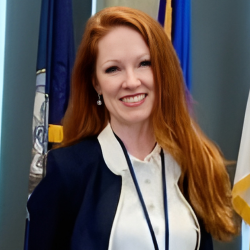
Christina Armstrong, Ph.D., is a nationally recognized leader in health technology with 15+ years of federal service advancing digital transformation in VA and DoD. She develops and leads virtual care innovation programs and implements strategies across healthcare systems to increase digital health literacy and utilization. With 30+ publications, her work focuses on implementation of science, digital health policy, and technology-enabled care models that support patients and staff.
Reimagining FND Care: A Multidisciplinary Wellness Model for Improving Function and Wellbeing in FND
Lauren Keats, Psy.D.
Intermediate
Abstract: Our global FND wellness platform delivers accessible, non-individualised education, community support, and wellness evaluations for individuals lacking specialised care. Through weekly multidisciplinary modules, psychosocial and family workshops, and an active peer community, participants show meaningful improvements in function and self-reported wellbeing, demonstrating a scalable path to thriving with FND.
Course Goals and Educational Objectives:
Course Outline:
Introduction to Speakers (3 minutes)
Understanding Stigma as a Barrier to Healthcare Access (30 minutes)
Education & Community as Evidence-Informed Antidotes to Stigma (10 minutes)
Case Example: A Global Wellness Platform for FND (15 minutes)
Mechanisms of Change in Scalable Psychoeducation (10 minutes)
Role of Students and Trainees in Program Sustainability (10 minutes)
Ethical Barriers: Licensure, Jurisdiction, and Limits of Care Delivery (15 minutes)
Implementation Considerations for Clinicians & Systems (17 minutes)
Q&A / Discussion (20 minutes)

Lauren Keats, Psy.D., is a neuropsychologist and psychology director at re+active therapy and wellness. She completed her clinical internship in integrated behavioral medicine and post-doctoral training in geropsychology. She currently specializes in neuropsychological assessment and treatment of adults with a broad range of conditions, including functional neurological disorder, persisting problems after concussion, acquired brain injury, Parkinson’s disease, and neurodegenerative disease.
Painting Myself: 30 Years of Creative Practice
Robin Walker, MA, LMFT
Intermediate
Abstract: A biography of the lessons learned over a 35 year career as a psychotherapist/artist, illustrated by his own painted self-portraits. Includes lessons about Finding a style, Making mistakes, Joseph Campbell, What makes a person want to be a therapist (or an artist), Good listening and more.
Course Goals and Educational Objectives:
Course Outline:
Introduction 3 mins
The value of biography 5 mins
Why I am a therapist 15 mins
Family history
Every great story begins with a death
Feeling invisible and the human need to be seen
Painting and the creative urge.
The limits of education in psychology 15 mins
The challenge to new therapists
Integrating knowledge and experience
Focusing on personal growth
Defining individuation The value of focusing on individuation
Artistic examples 30 mins
My movement into serious art
Joseph Campbell’s influence
A second death and emergence of a mentor
COVID and a challenge
Psychological value of self expression
Authorship over experience
Identity reconstruction
Emotional regulation
Attunement
Tolerance of ambiguity
Non-verbal processes
Therapeutic Lessons from Art 30 mins
Mistakes and perfectionism
You can’t change people, but people change
The “Too Smart” therapist vs. the “Curious” therapist
Courage and willingness to fail
Miscellaneous, wiggle room, and questions 22 mins
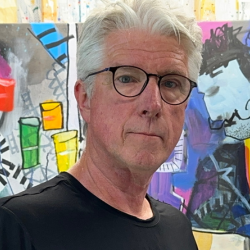
Robin Walker, LMFT, has been a full-time private practice psychotherapist for nearly 40 years. He’s also been an artist for the duration. His practice (therapeutic and artistic) has been devoted to helping people find authenticity and creativity in daily life. His work can be seen at two Santa Monica galleries, the Beverly Hills Art Show and at his office.
|